About MBOMIPA WMA
About MBOMIPA WMA
MBOMIPA Wildlife Management Area
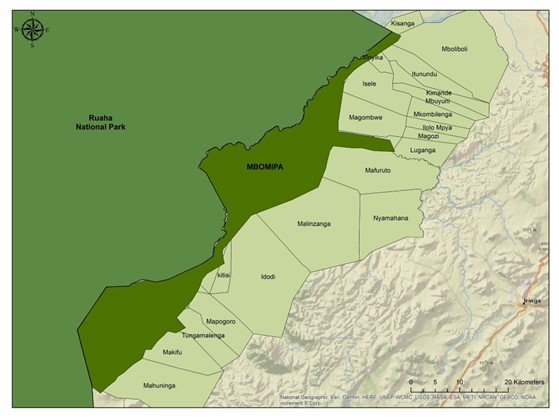
MBOMIPA (Matumizi Bora ya Maliasili Idodi na Pawaga) is a community-based Wildlife Management Area in Iringa, Tanzania, uniting 21 villages to conserve wildlife and sustainably manage natural resources within the greater Ruaha Ecosystem.
Located near Ruaha National Park, it empowers communities, supports livelihoods, protects biodiversity, and promotes responsible land use through participatory, community-led conservation initiatives for long-term resilience and development.
Our History
The Association for the Conservation of Wildlife and Sustainable Use of Natural Resources in Pawaga (MBOMIPA) was established in 2002 as a community-led initiative to promote sustainable natural resource management and improve local livelihoods through conservation. Its formation marked a significant step toward empowering local communities to actively participate in wildlife conservation and benefit from the sustainable use of natural resources.
As Tanzania advanced the concept of community-based conservation through Wildlife Management Areas (WMAs), MBOMIPA became one of the 16 pilot associations selected to implement this model. This laid the foundation for the establishment of the MBOMIPA Wildlife Management Area (WMA), where communities would gain user rights over wildlife resources and participate directly in their management.
On 24 March 2009, the association was officially registered as a Authorized Association (AA) under the Societies Act Cap 337 R.E. 2002 (Registration No. SO11293). This formal registration strengthened the institutional capacity of MBOMIPA and enabled it to effectively oversee the establishment and management of the WMA in accordance with national laws. The creation of MBOMIPA WMA was guided by the Wildlife Conservation (Wildlife Management Areas) Regulations of 2005 under the Wildlife Conservation Act Cap 283. These regulations provided the legal framework for communities to manage designated conservation areas, benefit from wildlife-based investments such as tourism and regulated hunting, and ensure sustainable use of natural resources.
Over time, both the association and the WMA have continued to evolve through key regulatory amendments introduced in 2012, 2018, and 2020. These improvements have strengthened governance systems, enhanced transparency and accountability, and reinforced community participation in decision-making processes.
Today, MBOMIPA WMA stands as a successful example of community-based conservation in Tanzania, where local communities are at the center of protecting biodiversity while also benefiting socially and economically from the sustainable management of wildlife resources.